Showing posts with label world-building. Show all posts

Monday, June 6, 2011

World-Building, Part 5: Genre

I'm tying up my world-building series with a very short post today. I've talked about my basic building blocks for world-building: characters, setting, rules, and climate. There is also genre, which isn't so much "build your world with genre." It's more "your genre is going to affect your world-building."

For example, if you're writing historical fiction, the world you're working in is going to be very specific. If you're writing horror or mystery or romance or fantasy, there might be certain aspects of the world-building that will be different than other genres.

Of course there are books that mix genres. Often, though, there are things you probably won't see in some genres.


Photobucket


Do you write in one genre? Do you have several genres you work in? What's your favorite to write or to read?

Friday, May 27, 2011

World-Building, Part 4: Climate, Seasons, Etc.

Climate plays a big part in world-building. Things like weather, seasons, day/night can also shape your world or individual scenes. Your characters are going to be feeling and experiencing and seeing different things depending on all of this. If it's a sweltering summer, what you write is going to be very different than if it's an icy winter. What your characters might see in the light of day could be different than what they notice creeping around in the darkness. A desert will obviously have different obstacles than a jungle.

All of this can add tension to your story. It can cause predicaments for your characters or it can aid them.


Photobucket


Photobucket


How does climate play a part in your stories? Do you think it's an important factor in what you write?

Wednesday, May 18, 2011

World-Building, Part 3: Rules

I'm back! Finally! Today I'm exploring the very simple idea that your world needs rules. I don't mean writing rules; I mean you need to have boundaries established for your world.

There are two major elements in a lot of world-building that I'm going to tackle today: science and magic.

Your world is almost positively going to be bound by some kind of rules of science. Gravity, heat, geology, plants, animals, etc. Even a lack of these things could exist on your world, but there would be reasons and repercussions. No gravity—how do people live, then? They live on world of ice—how do they keep warm?

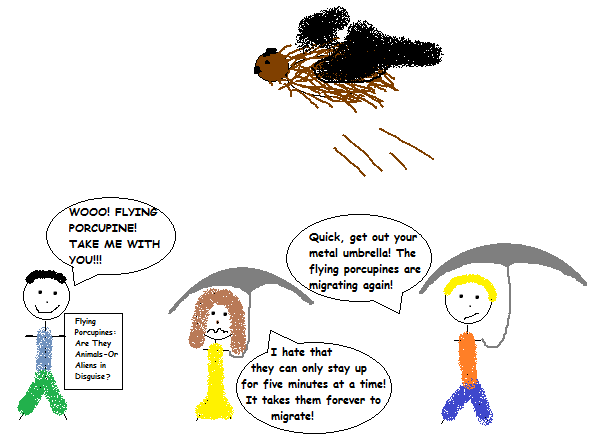
Your world can be anything you want it to be, but if there aren't boundaries and rules, no one is going to understand it. If you have flying porcupines, fantastic, but make sure that we know if there are limitations or problems with this.

Photobucket


In the last novel I wrote, Rising, I created technology that all ran off of one particular source of energy. I've spent the past year and some odd months inventing the various kinds of tech used by this world. I had to know how certain things worked and everything had to be consistent.  Aside from imaginary technology, I also had some science that was extremely important to the story. I did a ton of research on the internet, read a lot of things, understood some of it, and got a headache trying to figure out other parts of it and how it would relate to my story. Could I do Option A? Would that be plausible? What about Option B? Would it make sense based on the scientific rules established in this world? What other options did I have?  Would I lose my mind before I figured it all out?


Photobucket

That's when I went to my brilliant friend Emily, who is my go-to for Things Science Related, and she explained this particular science to me clearly and helped me piece together how some things would plausibly work and how some things wouldn't work.

The "wouldn't work" bit was just as important as the "would work" stuff. It meant that I was stuck with certain things I couldn't do, because I would be undermining the established science of this world. I had to then reevaluate my plans and figure out how to solve the plot problems based on this knowledge.

The same thing works for magic you have in your world. When my co-author and I began to plan and write our Restoration series back in 2003, we decided to base the magic on the elements. There are limitations—some magic is harder than others, the ones doing magic can get exhausted easily, stuff like that. There are some things we haven't explored yet, but in a long series, we have a time and a place in different books to explain certain things.

The point is, you have magic, great, but what are the rules? Are there limitations? Limitations can help your characters. Everyone has a weakness (or they should). Even the all-powerful genie in Disney's Aladdin was bound by rules. He could grant any wish, yes, except he was a prisoner of his lamp and bound by his genie laws.

We don't create rules to frustrate ourselves (though ohhh, the rules we create can lead us to some frustrating situations). We create rules so that we know how our world operates and how we can plausibly build our plot. Rules shouldn't create confusion.  They should add to the world and give you and your readers a solid grasp on what's possible for that world…and what isn't.


*Have you found the boundaries of your worlds helpful? Have you had to reevaluate your plot or plan something because of the established rules of your world?

Tuesday, May 10, 2011

World-Building, Part 2: Setting

As I said in my first world-building post, characters and setting really go hand-in-hand.  If you have the characters, they're not going to go anywhere until you at least know where they're starting.  Even if you don't always know where they're going next or why they're starting there.

Your setting can be anywhere, but you want to let your reader get an idea of where your character is, what kind of world they're on, what's around them, and what's normal or not normal.  You can describe your setting if you need to, but you can also use characters' actions to tell you about it.  You can find out a lot about what kind of place someone is in by what a character is doing or experiencing. I typed up some random sentences as examples of this:


Photobucket


Photobucket


Photobucket


The more familiar you are with your world, the easier it will be for you to write in it and the more real it will feel to you.  If you need to write out every description of where your character is, what everyone looks like, what people are wearing, etc., then go ahead and write it out for yourself.  Then consider what descriptions really need to be in your story and what the best way to present them might be.  There's a balance between giving a clear picture of your world and over-describing everything.

What works for one person isn't necessarily going to work for someone else.  There are so many rules that crop up in writing--don't write like that, write like this instead.  It's good to grow in our craft, of course, but I think sometimes that if we focus too much on all the rules, we can get overwhelmed and lose the creativity of just writing.  Language and description can always be cleaned up in revisions.  Have fun exploring your world!

*How do you prefer to explore the settings in a book when you're writing/reading?

Friday, May 6, 2011

World-Building, Part 1: Characters

Everyone builds worlds differently.  Everyone writes differently.  I know there are so many writers out there who have built far more worlds than I have, but I'll share what I can from my experiences and I hope that you guys will share your thoughts and world-building techniques, too.

In all of the novels I have written and/or co-written, I've had the chance to develop several different types of worlds.  Each of these worlds required different types of building blocks to be established and I've learned different things from each one. 

I was torn between talking with setting and characters today, because they go hand-in-hand in many ways.  Of course you have to have a setting.  What is your setting?  A world covered with mountains?  Post-apocalyptic Earth where the only continent habitable now is Antarctica?  People living in boats, trains, floating cities, normal houses, caves?  You need to figure out what your world is like, and I will talk more about developing setting in my next world-building post.  Right now, I'm focusing on what I learn from characters, because when it comes down to it, I start my world-building with them.

I am a "character author."  My novels begin when a character walks into my head and says, "Hello, you're going to write my story! No, I don't care if you don't know what the setting or the plot is; you'll figure it out!  Now let me make myself comfortable in you brain and I'll poke at you with a stick until you figure out what kind of world this is."

More than that, characters are the eyes and ears and voice to tell the readers about your world.  (Unless you are telling the story in omniscient narrative, which I don't do--I would feel too disconnected from the characters.) I'm not talking about info-dumping; I'm talking about letting readers learn what the world is like by what a character sees, thinks, and does.

Let me throw some examples out there.

Example 1: Character sees a giant pointy-toothed cat and isn't fazed by it.  I know now that giant, ferocious looking cats are a natural part of this environment.  Character isn't afraid of it, maybe I shouldn't be worried either.

Photobucket


Example 2: Character observes a street full of people carrying white lilies.  She realizes that someone must have died, because white lilies are the symbol of death in this world.  Later in the story, someone approaches her with a white lily and I'm freaked out because: Ahhhh!! Who died!?!?

Photobucket


Example 3: Character loves this restaurant.  She goes there every week, and we find out through the gossip of a couple servers that her dad took her there when she was little.  After her dad died, she's come there by herself.  Later in the story, when the restaurant is destroyed in a storm, we feel the loss of the character's haven.

Photobucket


We didn't just learn about the characters, we learned about the world around them, what is happening in the story, and what their environment is like.

*What are your thoughts on characters and how they shape your world and settings?  Or do you come up with your world first and shape your characters around that?